
CivilSeal combines intelligent infrastructure assessment, robotic nondestructive evaluation, and biologically driven vascular repair to identify deterioration early and intervene precisely where it matters.
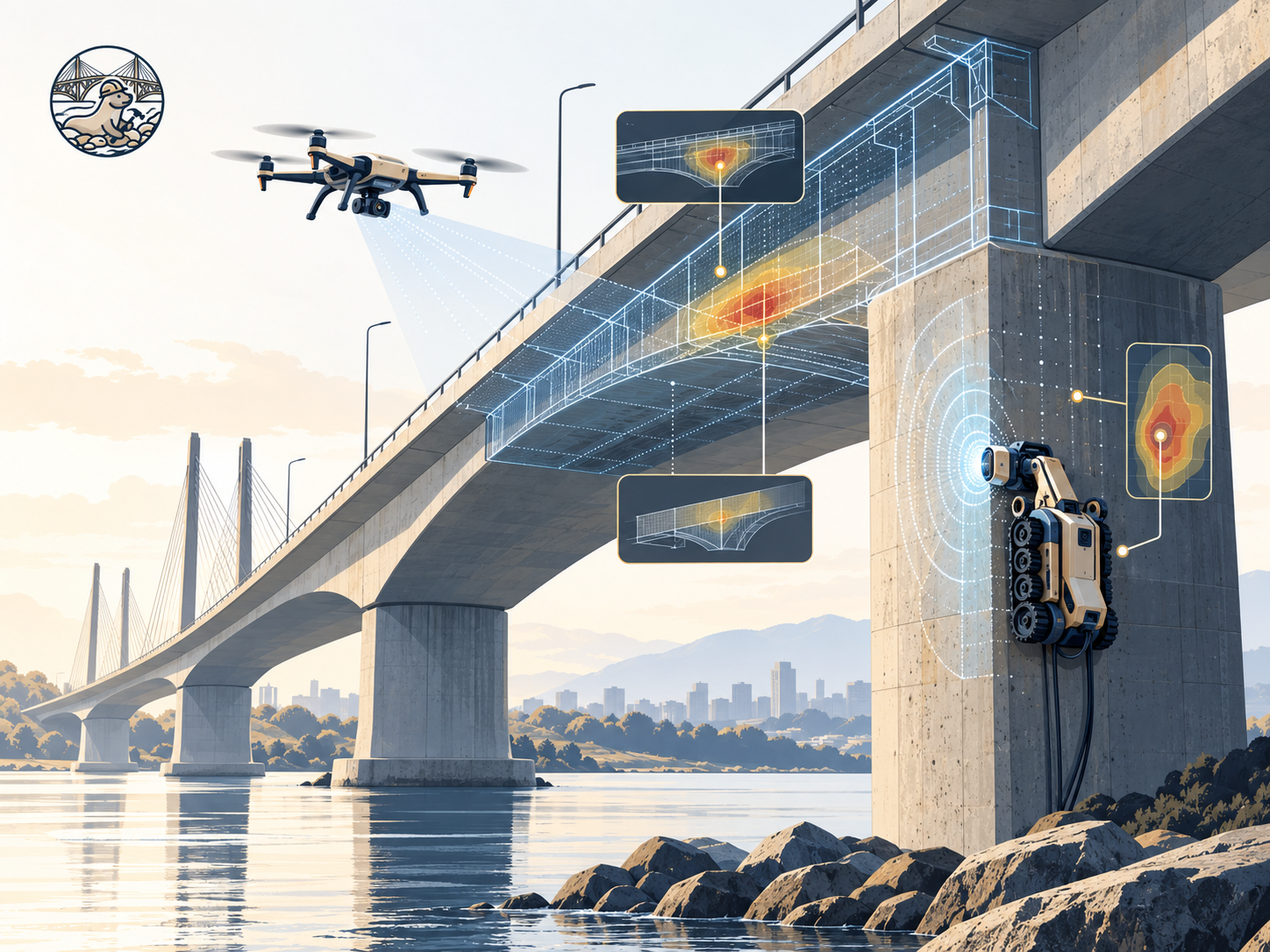
CivilSeal narrows large infrastructure networks down to specific structures and regions where detailed inspection and intervention matter most.
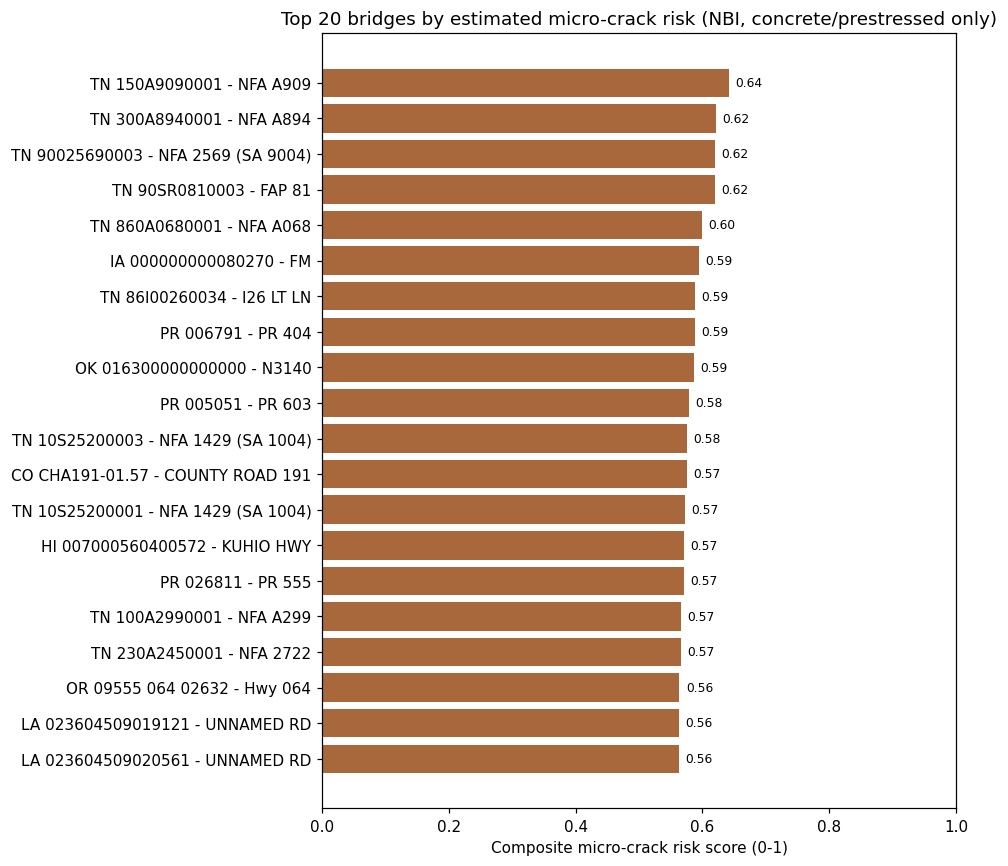
Rank bridges using condition, materials, structural type, loading, age, repair history, environmental exposure, and hazards.
Structural information and deterioration patterns identify bridge regions where damage may be most consequential.
High-priority areas receive higher-resolution nondestructive evaluation to locate the actual weak points and hidden damage.
Confirmed defects are evaluated by severity, structural significance, progression risk, and suitability for targeted biological repair.
CivilSeal integrates bridge condition, age, structural characteristics, loading, environmental exposure, hazards, repair history, and other available infrastructure data into an interactive geospatial decision-support platform. The goal is to focus detailed inspection and biological intervention where they can have the greatest value.
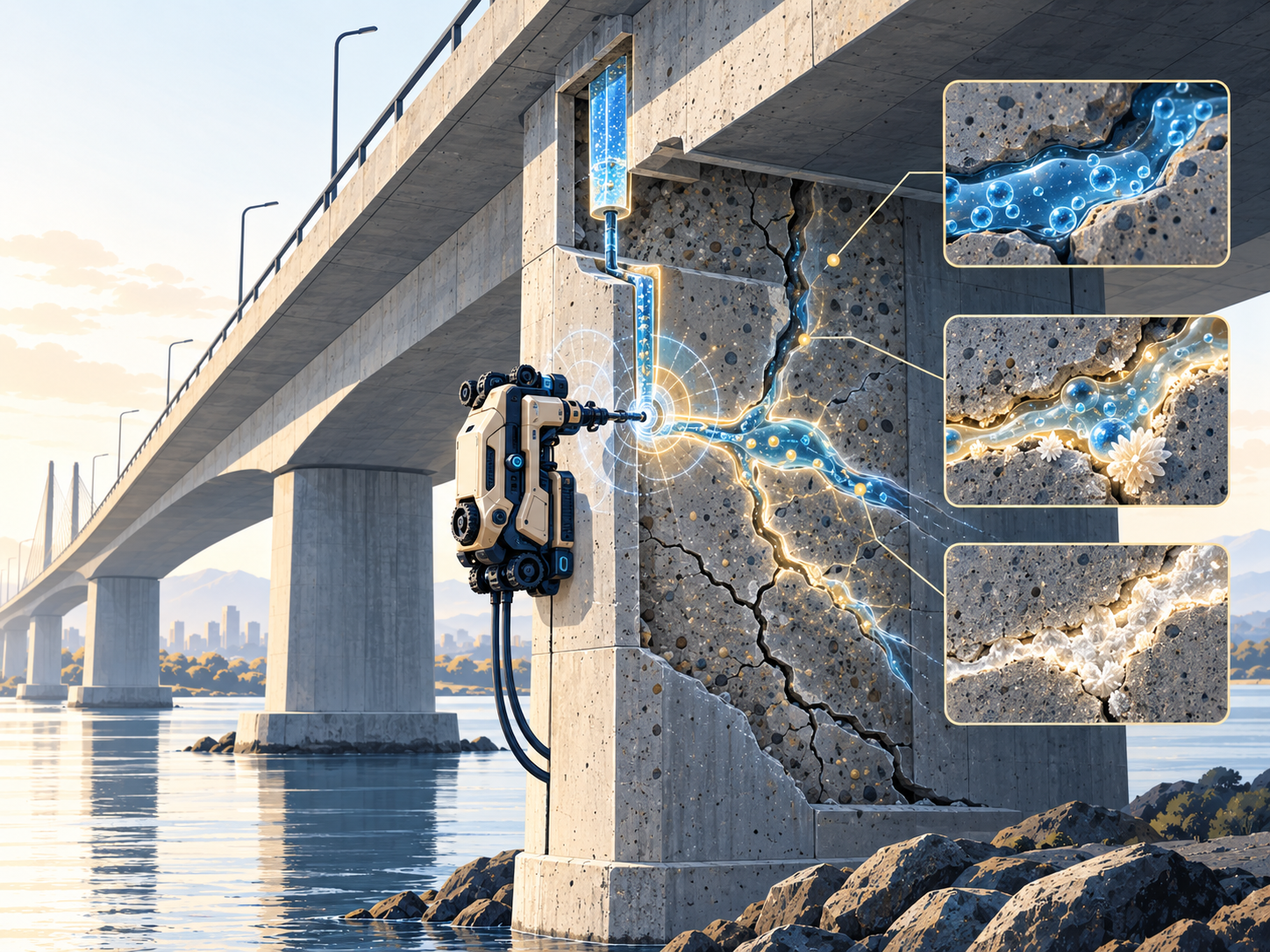
Once NDE confirms the weak point, CivilSeal creates localized vascular access into the existing subsurface crack network and delivers a biologically active healing medium directly where it is needed.
Instead of broadly treating large concrete surfaces, CivilSeal creates localized access to hidden cracks and delivers the healing material deep into the damage zone.
Small engineered channels connect the concrete surface directly to existing subsurface crack networks.
Agar hydrogel carries bacteria and nutrients into the targeted internal crack network.
Ureolytic bacteria promote microbially induced calcium carbonate precipitation inside the cracks.
Calcium carbonate develops within the damaged region rather than only at the visible surface.
A robotic platform localizes confirmed damage, creates targeted vascular access, delivers the healing agent, and supports post-repair verification.
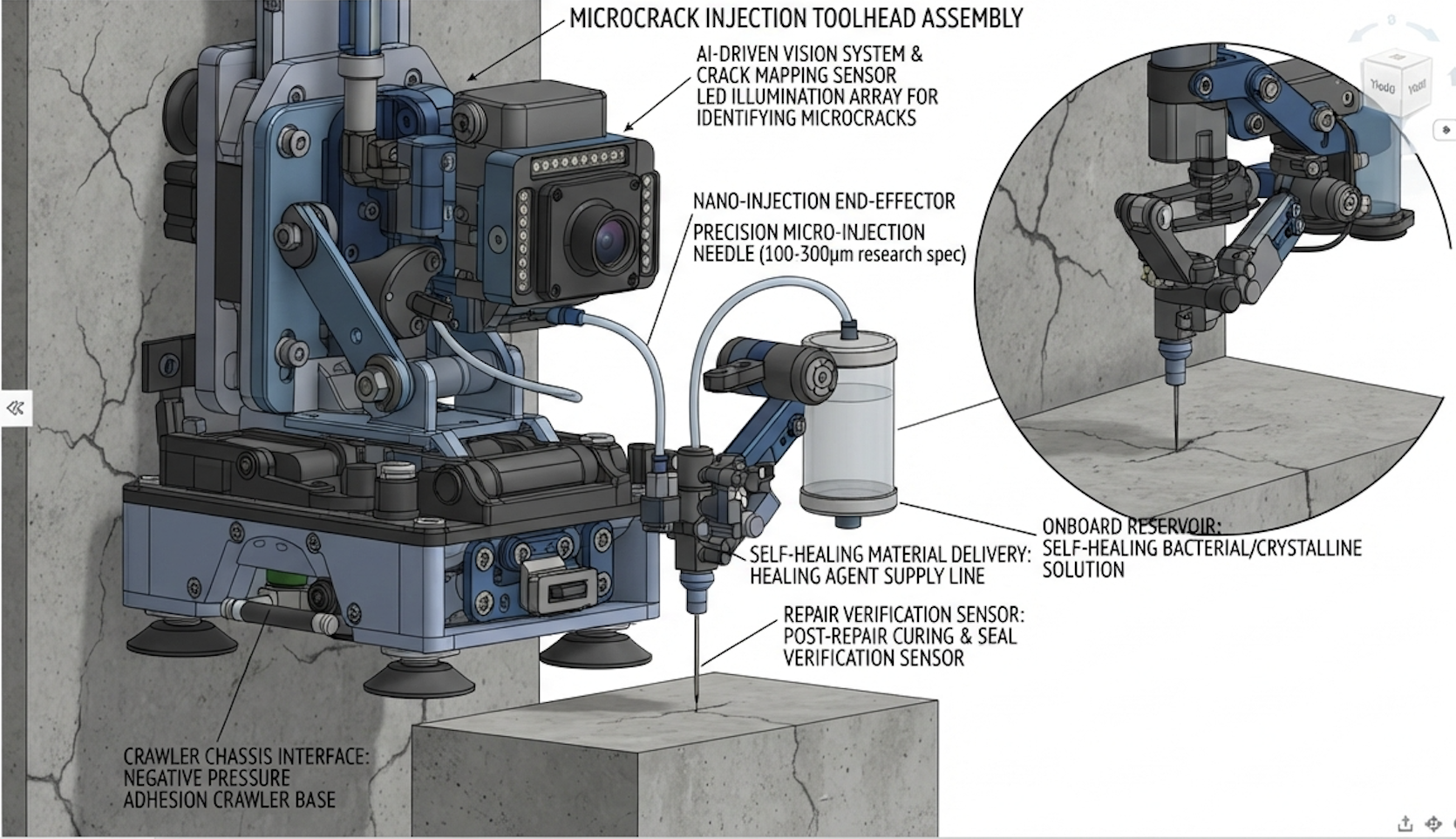
Proposed deployment architecture for rapid regional response and targeted infrastructure repair.
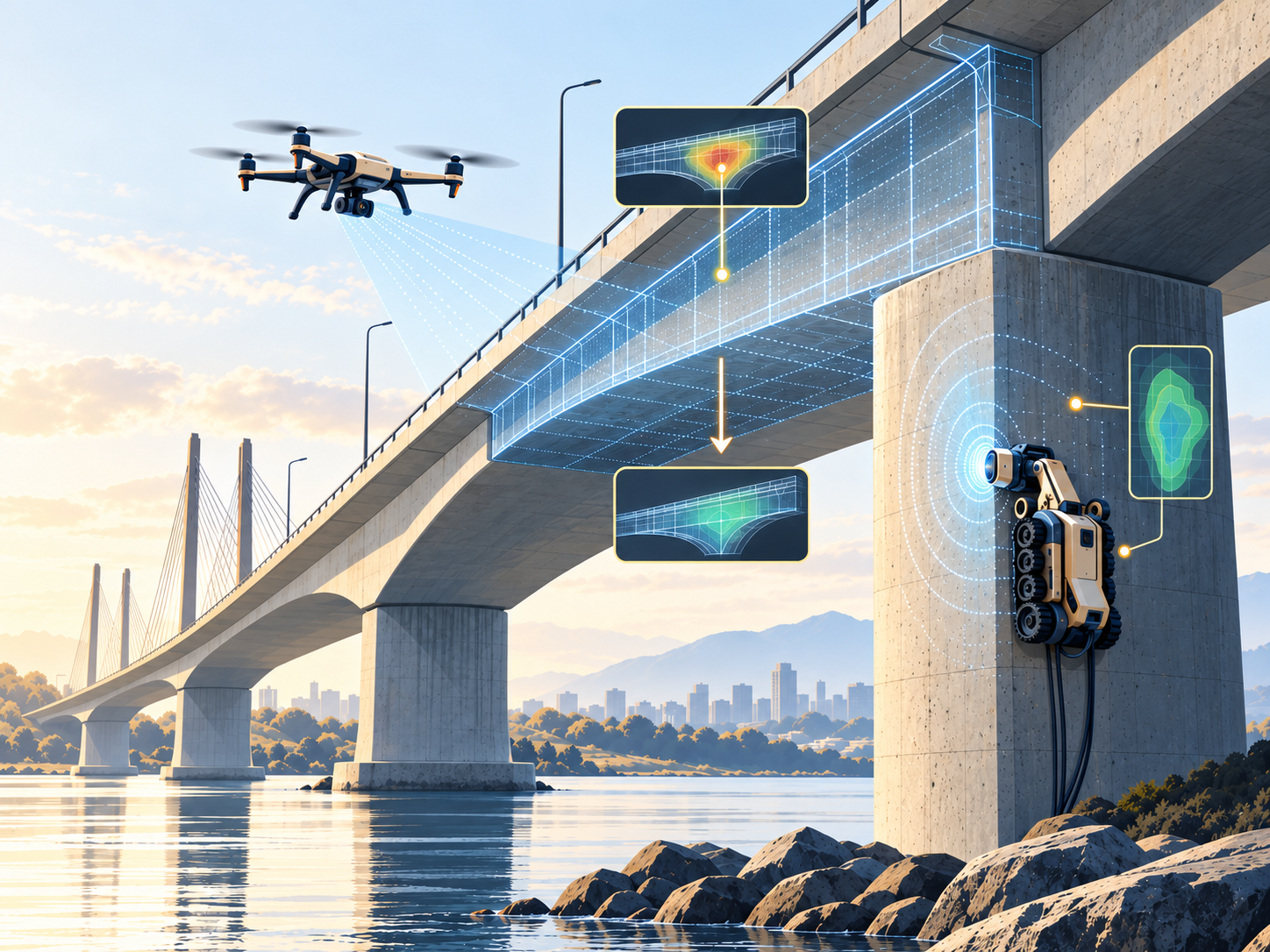
CivilSeal closes the loop by returning to repaired regions with nondestructive evaluation and comparing their condition with the original damage state.
Rescan repaired regions using complementary NDE.
Compare pre-repair and post-repair condition data.
Return verified results to the infrastructure condition and risk model.
Use repair outcomes to improve future inspection, prioritization, and maintenance decisions.
CivilSeal connects nondestructive evaluation with emerging vascular biological repair. Complementary sensing technologies identify and characterize deterioration, while targeted biological intervention provides a pathway for repairing confirmed internal damage.
CivilSeal combines complementary NDE technologies to characterize deterioration before targeted repair. Each method provides a different view of concrete condition and hidden damage.
Detailed in-depth assessment for identifying internal anomalies, cracking, delamination, interfaces, and changes in concrete condition.
Reflected stress waves help locate internal cracks, voids, delamination, debonding, and structural thickness.
Maps subsurface features including reinforcement configuration, concrete cover, member thickness, voids, and deterioration.
Rapid, non-contact screening of thermal anomalies associated with delamination, cracking, voids, and material changes.
Published laboratory research demonstrates that drilled vascular access can greatly improve transport of hydrogel-supported biological healing agents into existing subsurface crack networks.
Nearly complete healing-agent distribution throughout tested artificial crack networks with drilled vascular access.
Approximately 70 mg with vascular access versus approximately 20 mg without a channel after 14 days.
Biological healing-agent transport was experimentally studied across controlled artificial crack widths.
Agar hydrogel transported L. sphaericus bacteria and supported calcium carbonate formation inside cracks.
Systematic and bibliometric review of reinforced-concrete bridge defects, nondestructive inspection technologies, data-processing methods, computer vision, artificial intelligence, and future research directions.
View Publication →Experimental investigation of targeted drilling-assisted vascular access, hydrogel transport, bacterial delivery, and MICCP in damaged concrete.
View Publication →Review of vascular network design, fluid transport, fabrication strategies, self-healing systems, and applications in cementitious materials.
View Publication →NDE performance varies with defect type, geometry, material condition, access, environmental conditions, sensor configuration, and data interpretation. Current biological restoration results represent controlled laboratory proof-of-concept testing. CivilSeal proposes integrating these technologies into a targeted infrastructure maintenance workflow.
A closed-loop approach to prioritizing, detecting, repairing, and validating deterioration in aging concrete infrastructure.